
Our Law Firm believes that clients' success determines our own. So we ensure both by collaborating with our clients to achieve their goals.
Port Chester | NYC Real Estate Attorney
We Are Experienced In Residential And Commercial Real Estate Transactions
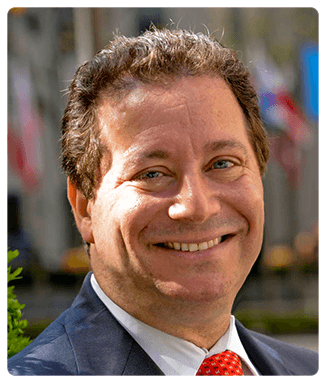
Introduction to John M. Crane
John M. Crane believes in helping his clientele with real estate transactions. His main aim is to enable entrepreneurs and busy professionals with their hectic schedules so that they can focus on what they do best and meanwhile provide them with a way to effortlessly buy and sell real estate. Undoubtedly, a number of investors consider real estate investments as unchartered territory. The main reason is its volatile nature; however, it need not be avoided. On the contrary, if invested properly, real estate proves to be a lucrative as well as a reliable way to generate substantial returns. In addition to this, it has a significant potential to generate consistent income stream while supplementing your portfolio with added benefits such as portfolio diversification, tax benefits, and appreciation potential. We understand the busy schedule you have. That is why we offer our Platinum Property Transfer System, which permits you to defer the questions of the loan officer, realtor, and third parties to us as your single point of contact.




An Insight into John M. Crane Practice Areas
Let us have a look at the practice areas in detail and their utility in your daily chores of life. The following are the important areas through which John M. Crane, New York real estate attorney, helps its clientele:
- Real Estate
- Business Transactions
- Civil Litigation
- Foreclosure Defense
- Probate
Real Estate
The term real property and real estate are used interchangeably. It comprises of land that includes immovable structures like buildings, houses, bushes, trees, and minerals permanently affixed to the land. In addition to this, it also encompasses interests, benefits, and rights that are legally considered attached to the real property, which includes certain rights to the air above the land, to drill in the ground beneath it, rights to live on the property for a specific timeframe, and to acquire the real property in the future.
Undoubtedly, real estate deals with a variety of related issues such as sale and purchase of real estate, transfers of real estate, legal aspects of the rental property, landlord issues, title to real property, settlement claims against property rights, property development, zoning, and land use. In addition to this, issues related to agriculture, home loans, foreclosures, and various other relevant topics. There is no denying that real estate is a complex practice area, which is further complicated by the significant inconsistency in the laws throughout different cities and states. In such a situation, having a skilled New York real estate attorney by your side can prove fruitful in amicably handling the issues in court when threatened with foreclosure.
Business Transactions
Business transactions are very complex in nature. Fulfillment of business legalities is a painstaking process and calls for the assistance of an experienced attorney who can guide you throughout the process. However, in the event of the death of a relative or a close family member, the court appoints the administrator on the assets left by the deceased, so that the person entitled to inherit these assets can take over at the due course of time. For that, our concierge service is the apt choice for you to help you through the administration process by leaving all of your legal responsibilities to us. However, the administration process is highly organized and supervised by the courts to ensure that your loved one’s wishes are fulfilled as per their desire. To do this smoothly, you need to have an experienced New York real estate attorney by your side who can help you with the administration process.
Civil Litigation
The term civil litigation is defined as when two or more parties became entangled in a legal dispute and seek monetary compensation for the settlement of the dispute rather than criminal sanction. The cases encompass civil litigation includes residential and commercial properties, nonpayment of common charges, breach of contract, and foreclosure of a cooperative apartment. Hence, to solve all these issues amicably and efficiently, an experienced New York real estate attorney by your side is imperative, who can follow all the updated case leads and come up with a strong defensive strategy.
Foreclosure Defense
Foreclosure can be defined as a home belonging to a bank that used to belong to a homeowner. There are millions of people who are in the foreclosure process, starting to fight back against this occurrence through stalling the foreclosure proceedings. This legal strategy to fight back is known as foreclosure defense. However, in order to succeed in this process, an experienced and highly skilled New York real estate attorney is needed, who knows how the mortgage industry works.
Probate
Probate is the legal way in which an estate gets settled under the guidance of the Surrogate’s Court. If someone dies with a Will, the Court will appoint and Executor or Executrix. If someone dies without a will, the court appoints an administrator, who is usually a surviving spouse or an adult child. The appointed person has the legal authority to gather or value the assets owned by the estate, sell assets as directed by the Will or as necessary to pay bills and taxes. In addition to this, he or she distributes the assets to the heirs or beneficiaries as per the Will or NY State law.
Client Testimonials
Why Choose John M. Crane | Port Chester Real Estate Attorney
John M. Crane helps his clients in establishing a plan which protects their assets when they are alive, and with real estate issues, civil litigation, and foreclosure defense. Estate planning, as well as real estate, is a painstaking process, and so are the state and federal laws which govern it. In such a scenario, it is advisable to hire a skilled New York Attorney who will ensure that your plans meet all legal requirements.
Hiring a New York Real Estate Attorney can help you in formulating a legal documents regarding estate planning, trust administration, probate, civil litigation, business transactions, real estate contracts, and matters associated with them. It helps you in managing your real estate planning affairs and looking out for the well-being of your loved ones, even if death should part you from them.
100% Focused on Your Case
Real Estate Transactions
Business Transactions
Civil Litigation

Foreclosure Defense
Our Strength
We remove the stress and time requirements typically required of individuals that are purchasing or selling real estate. After 25 years and thousands of closings, we understand the process of a real estate transaction. Since it is a process, we have developed systems and procedures and utilize a team approach to enable our clients to have minimal involvement, but still be kept informed.
Areas We Serve
Serving New York City, Manhattan, the Bronx, Queens, Brooklyn, Westchester, Putnam, Nassau and Suffolk Counties. Whether a real estate transaction or litigation matter, John M. Crane, P.C. regularly represents clients in Manhattan, Brooklyn, Queens, the Bronx, Westchester, Putnam, Nassau and Suffolk Counties.
Port Chester began as an industrial boat-building community. It was once known as “Saw Pit” but has since evolved to be a vibrant food destination with a bustling downtown restaurant scene, including Tarry Lodge and F.I.S.H. as well as Sonora, Alba’s, The Willett House, Tarry Lodge, Tarry Lodge, F.I.S.H. and Sonora. The village boasts a diverse immigrant population, which makes it a dining-destination with many authentic restaurants from Brazil, Mexico, Colombia, and Colombia.
Port Chester is also home to The Waterfront, a shopping/entertainment centre that includes a 14-screen movie theatre, Costco, Bed Bath & Beyond and Super Stop & Shop, Marshall’s, and many other restaurants.
Port Chester has:
The recently restored 1920s Capitol Theatre, Janis Joplin’s August 1970 appearance at the Theatre; the Landmark Condominium (the former Lifesavers Factory); and a marina with 75 slips along the Byram River are some points of interest.
Port Chester boasts six parks that can be used for general recreation. These include sports and picnicking. A water-spray playground has been installed at Columbus Park for summer relief.
SERVICE AREA LOCATIONS
Office Locations
New York City Office
295 Madison Avenue, 12th
Floor New York, NY 10017
Phone: (212) 748-9477
Email: info@johnmcrane.com
Fax: (888) 820-6197
Westchester Office
342 North, Main Street
Port Chester, NY 10573
Phone: (914) 937-7272
Email: info@johnmcrane.com
Fax: (914) 937-7277
Queens Office
61-43 186 Street, Suite 573
Queens, NY 11365
Phone: (914) 937-7272
Email: info@johnmcrane.com
Fax: (888) 820-6197